
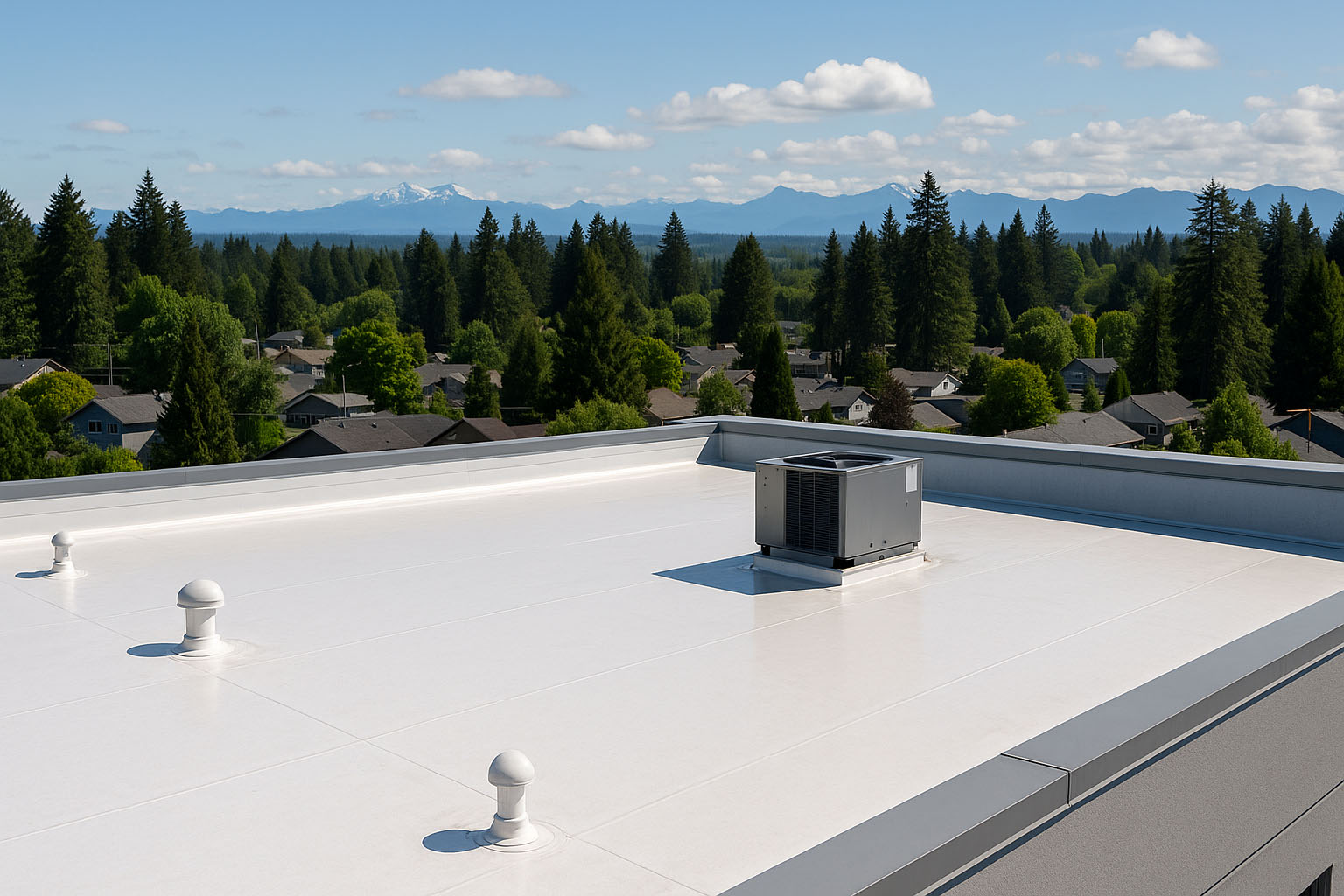
If your home in Western Washington has a low-slope or flat roof, choosing the right roofing material is critical. Unlike steep-pitched roofs, low-slope roofs don’t shed water as efficiently, making them more vulnerable to pooling, leaks, and weather damage — especially in our region’s wet and moss-prone climate.
That’s why more homeowners and contractors are turning to TPO and PVC roofing systems. These modern, energy-efficient materials are engineered for performance on flat and low-slope roofs and are quickly becoming the go-to choice for homes in Stanwood, Mt. Vernon, Everett, and surrounding areas.
🏠 What Are TPO and PVC Roofs?
TPO (Thermoplastic Polyolefin) and PVC (Polyvinyl Chloride) are types of single-ply membrane roofing systems. They’re installed in large, waterproof sheets that are heat-welded at the seams to create a strong, leak-resistant barrier.
TPO Roofing
-
White, reflective surface for energy efficiency
-
Resistant to UV, chemical exposure, and punctures
-
Budget-friendly and durable
PVC Roofing
-
Strong chemical and fire resistance
-
Excellent in ponding water situations
-
More flexible than TPO and long-lasting
Both are excellent flat roof options, but one may be better depending on your home’s needs.
🌧 Why Flat Roofs in Western Washington Need Special Attention
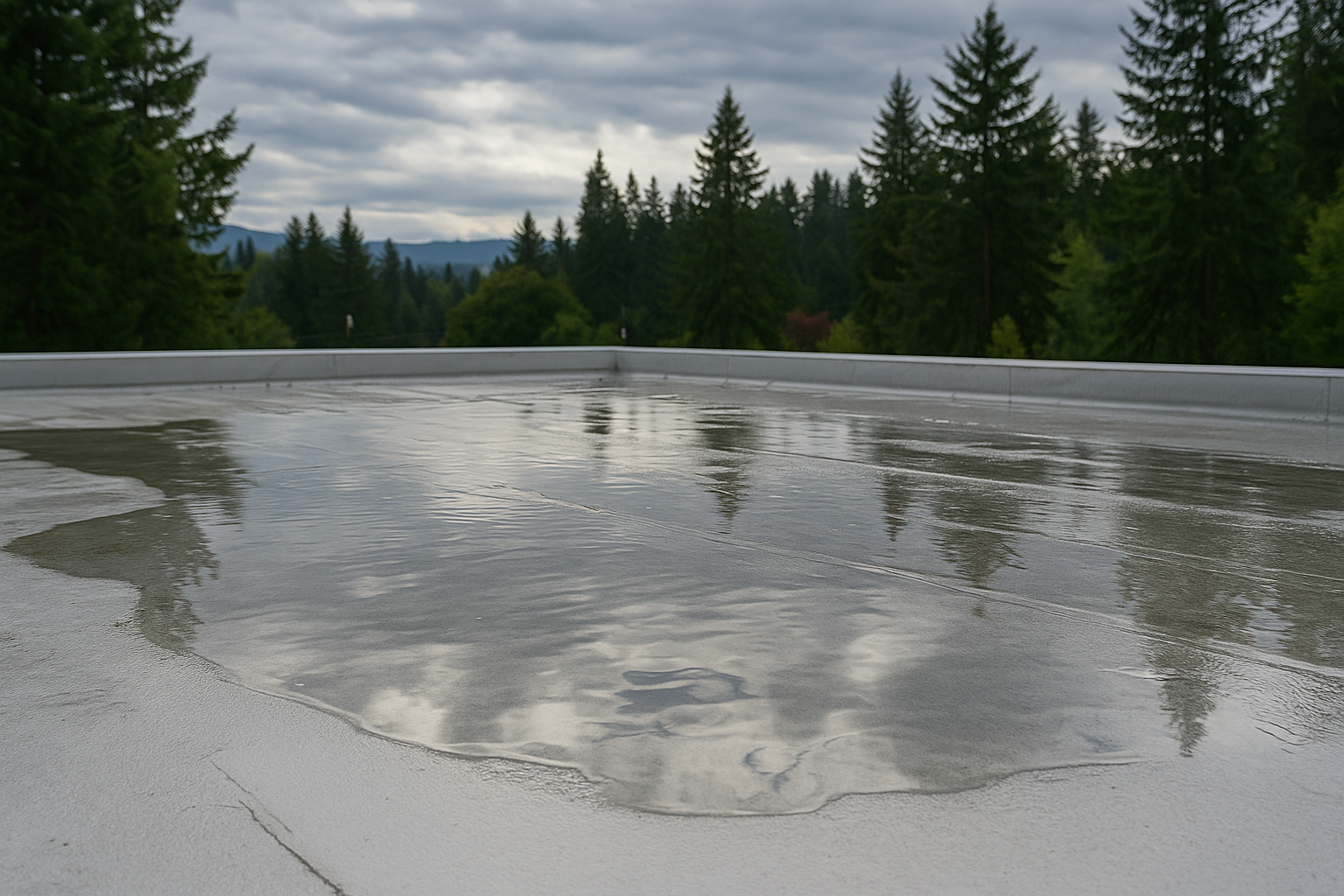
In rainy, humid areas like Stanwood and Mt. Vernon, flat roofs are especially prone to:
-
Ponding water
-
Moss and algae buildup
-
UV damage in summer
-
Thermal cycling (freeze/thaw cycles)
TPO and PVC membranes address these issues head-on by forming a continuous, watertight surface. Compared to older systems like torch-down or tar and gravel, they’re lighter, safer, and far more durable in the long term.

🧰 What to Expect From a TPO or PVC Roof Installation
Working with a qualified contractor like Owner’s Roofing, the process is straightforward:
-
Inspection & Prep – We inspect your roof deck and prepare the surface.
-
Membrane Installation – We install the TPO or PVC membrane in large sheets.
-
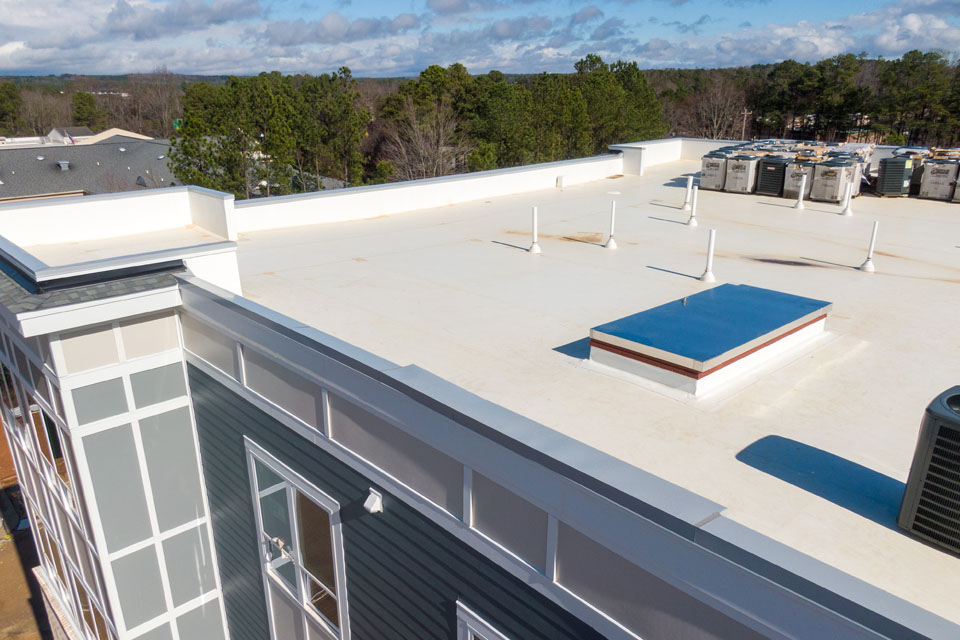
Heat-Welded Seams – Using hot-air welding, seams are fused to create a watertight bond.
-
Flashing & Detailing – Edges, vents, and transitions are sealed professionally.
-
Final Review – We walk the project with you and back it with a strong workmanship warranty.
Most TPO and PVC roof replacements in Stanwood and Mt. Vernon are completed within 1–3 days, weather permitting.
📍 Why Choose Owner’s Roofing for Flat Roof Projects?
-
We specialize in TPO roofing in Stanwood and PVC roofing in Mt. Vernon
-
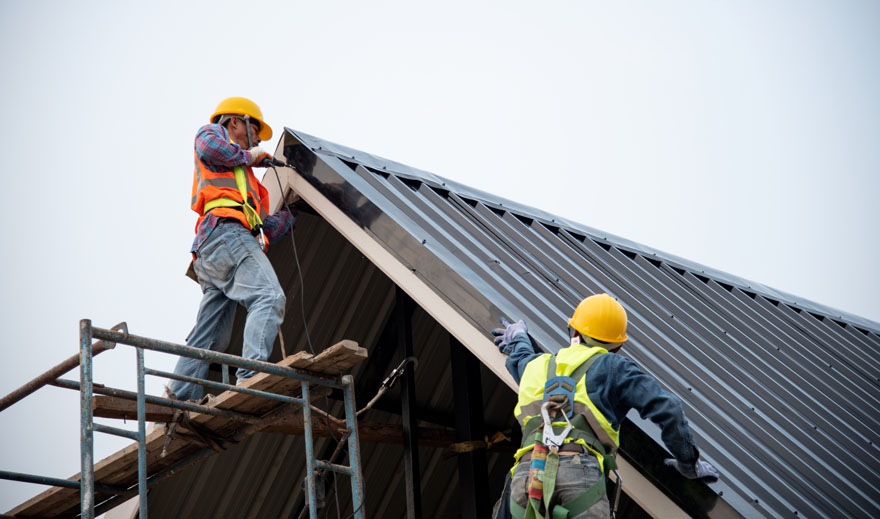
Our team is trained in single-ply membrane installation best practices
-
We offer clear estimates, fast turnarounds, and no-hassle warranties
-
We use high-quality materials designed for the Pacific Northwest’s climate
We’re not just another roofing company—we’re your local flat roof experts.
Frequently Asked Questions About TPO and PVC Roofing in Western Washington
continue reading
Related Posts
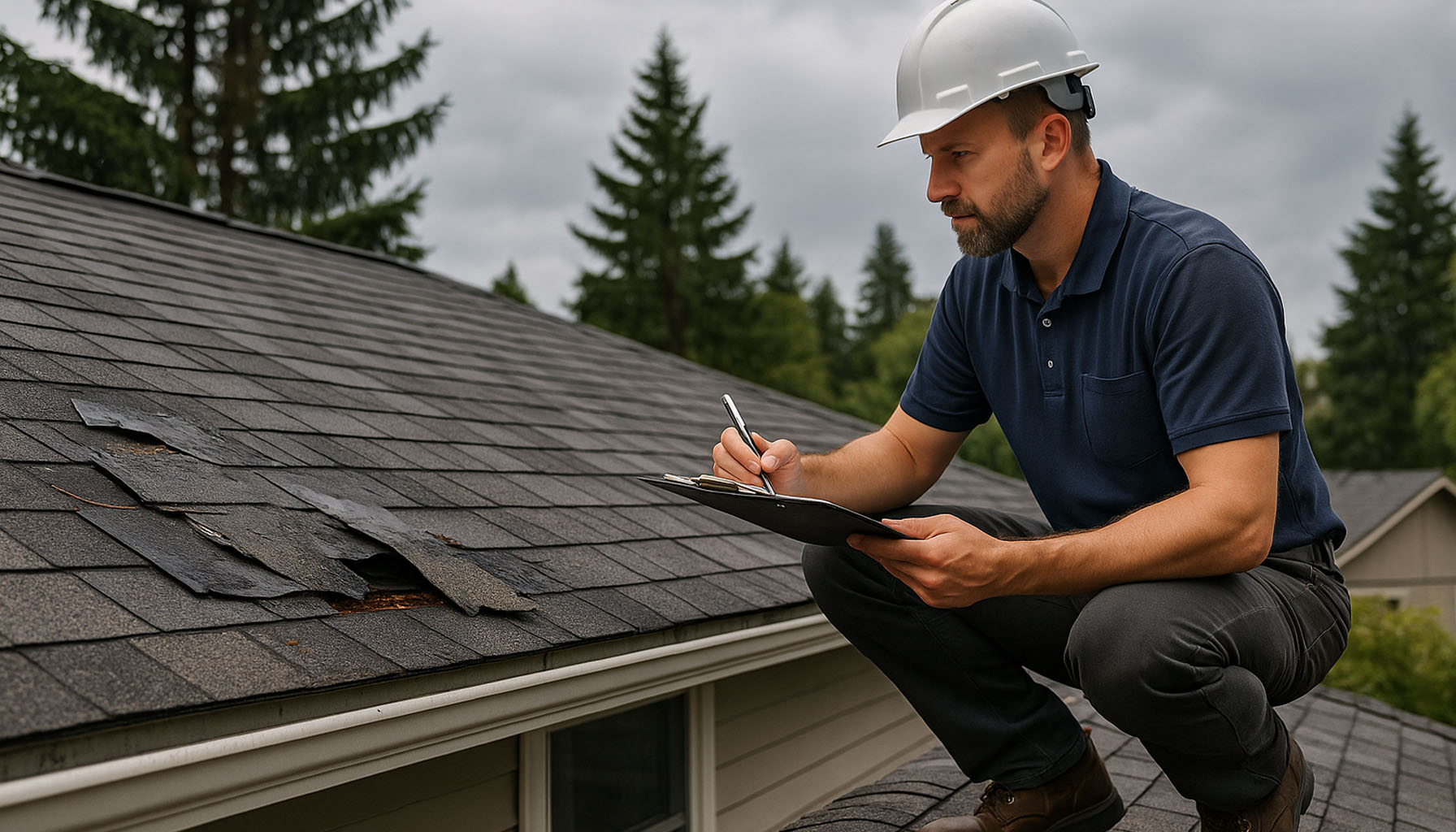
Filing a roof insurance claim after storm damage or leaks can be overwhelming. This guide explains what’s covered, how the claims process works, and why working with Owner’s Roofing makes roof repairs and replacements in Western Washington stress-free.
It’s mid-August, and winter weather is just around the corner in Western Washington. This guide explains what to expect, how to spot roof issues early, and why now is the best time to schedule an inspection with Owner’s Roofing.
Thinking about a roof replacement in Mt. Vernon? This guide walks you through the entire process—from inspection to installation—so you know what to expect and who to trust.